
10 First foods to offer baby

Top 10 First Foods for Babies: A Nutritionist's Guide to Starting Solids
Introducing your baby to their first foods is a delightful journey filled with anticipation and wonder. As parents, we eagerly await those precious moments when our little ones take that inaugural spoonful or grasp a tiny finger-sized snack. With a myriad of choices and information before you, it can be difficult to decipher "what you are supposed to do." Get ready as I share my top 10 first foods, each offering a unique blend of nutrients and flavours, ensuring that this milestone is not just nourishing for your baby's growing body but also a joyous experience for both of you
Avocado
Avocado contains lovely healthy fats needed to help baby grow, plus fill their little tummies. I love avocado for how versatile it can be: mash with some lemon juice or serve in slivers for an introduction to finger food (I also suggest rolling in hemp seeds for a boost of iron and to help make it grippy)
Lamb Cutlets
A great resistive food for baby to start to map their mouth and bonus for being an iron-rich food. This is also a great family friendly food, so you are minimising the number of meals you are making. Remove any lose bits of meal or gristle and let baby suck away
Root Veggies
These are nutrient-dense carbohydrates to provide the energy babies need. Another versatile food that you can cook for yourselves, then easily mashed into a puree, or baked into soft finger-shaped pieces for baby
Sweet Potato and Apple Puree Recipe
Eggs
A nutrient-dense powerhouse for babies! Packed with protein, iron, choline, vitamin D to name a few. Egg is a common allergen but can be introduced after a few low-allergenic foods around 6 months, so be mindful to start with a few small introductions first, such as mixing ½ a teaspoon of well-cooked egg into a puree or make a simple omelette and offer in finger-shaped strips
Chia Seeds
They are packed with protein, healthy fats, and a great source of soluble fibre which supports bowel movements. Chia seeds can absorb up to 10 times their weight in water, so be sure to soak them in water for 10-15mins to plump before serving. I like to add these to anything and everything to boost the nutrient-density of a meal, for example: porridge, puree, smoothies, pikelets
Oily Fish
Our brains (including your baby’s) are made up of 60% fat, specifically DHA, which is an omega 3 fatty acid found in fatty fish such as salmon, sardines, mackerel, and tuna. Best known for its role in brain development and cognitive function, very important as your little one’s brain continues to develop. Fish is another allergen, so again start with 2-3 small introductions before making them a regular occurrence. A simple way to serve to bub is to mash sardines with some avocado and lemon juice or serve whole
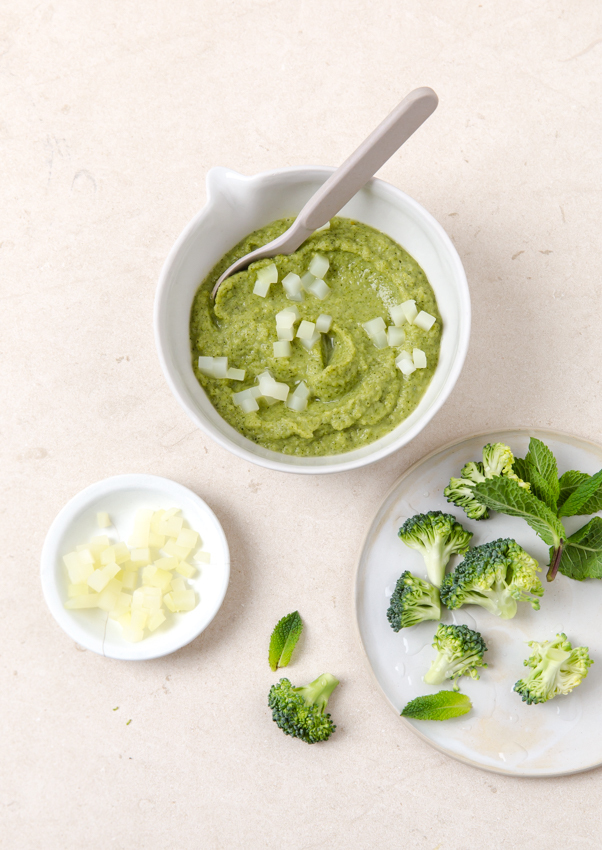
Salmon, Broccoli and Kale Puree
Fresh Fruit
Fruit contains a host of different vitamins, minerals, and phytochemicals. Aim to include the rainbow in your little one’s diet, as each colour contains different benefits. Additionally, fruit such as mango pit or watermelon rind are great resistive foods to help baby practice sucking, chewing, and map their mouth early on their journey
Sauerkraut
Probably not what you expected on a baby food list, but I have included it here for many reasons. Firstly, sour tastes are not usually given to babies in Western cultures, so including it can help to broaden their palate. Secondly, sauerkraut is a probiotic-rich food, which can continue to support their microbiome. Start with a few small brine introductions, before offering pulsed or smaller pieces
Liver
Liver is a powerhouse of nutrients that makes it an excellent choice for introducing solid foods to babies. A good source of iron, which is a crucial component for healthy blood development, and supports optimal cognitive and physical growth. It's also a great source of vitamin A, essential for vision, immune function, and skin health. Additionally, its easily digestible nature makes it an ideal first food for babies. Choose high quality, organic liver from chicken or beef
Herbs and Spices
Contrary to what you might think, baby food does not need to be bland! Adding fresh herbs, spices, and flavourful foods such as onion and garlic not only boost the nutritional profile of your meals, but also expose bub to a variety of flavours early on, which can help expand their palate
Top 10 Herbs and Spices to Introduce to Baby
Get ready to explore the delicious possibilities that await your little one on their culinary journey!
Kelly Benton is a Nutritionist specialising in maternal and baby nutrition. She is a mother of two little ones, right there in the thick of it with you. After experiencing maternal nutrient depletion through her first pregnancy and postpartum period, Kelly saw a need to educate and empower other women to proactively take health into their hands so they can have a more positive experience. Kelly is available for 1:1 consults, to book please visit her website


